
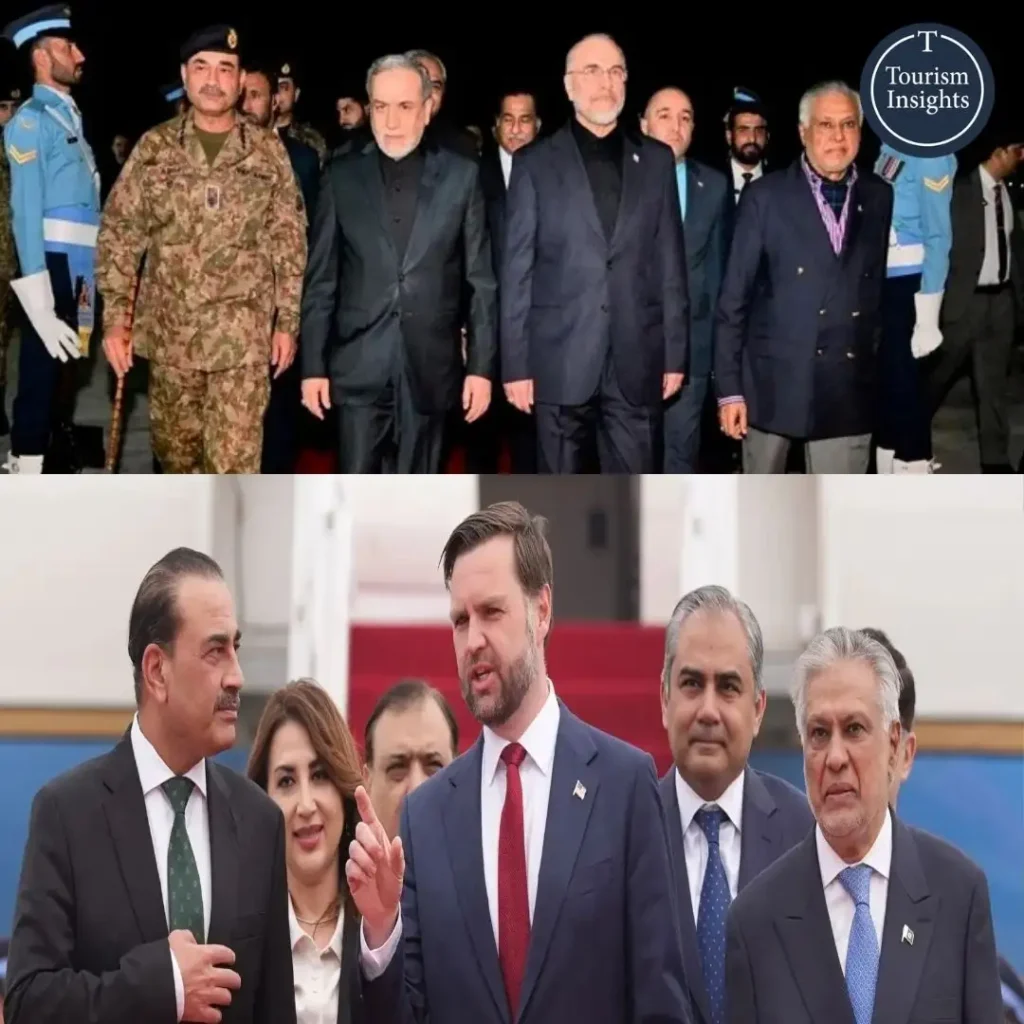
Over the past weeks, since Pakistan became the unexpected mediator between Iran and the US, the country had all but rejoiced. Not to mention the whole world has not been able to stop talking about the subject. And Pakistan, naturally, set up a lot of expectations aligning with the presumption that the negotiations would go well, especially regarding the tourism industry.
We lived in absolute bliss for one day.
Petrol immediately went down another 12 PKR despite having been raised over a baffling 137 PKR just 10 days prior. Moreover, on the eve of the much-anticipated peace talks, Pakistan’s stock market, KSE-100, was able to recover by 11.17% after a dreadful 10-week losing period, gaining 16,793 points and closing at 167,191.
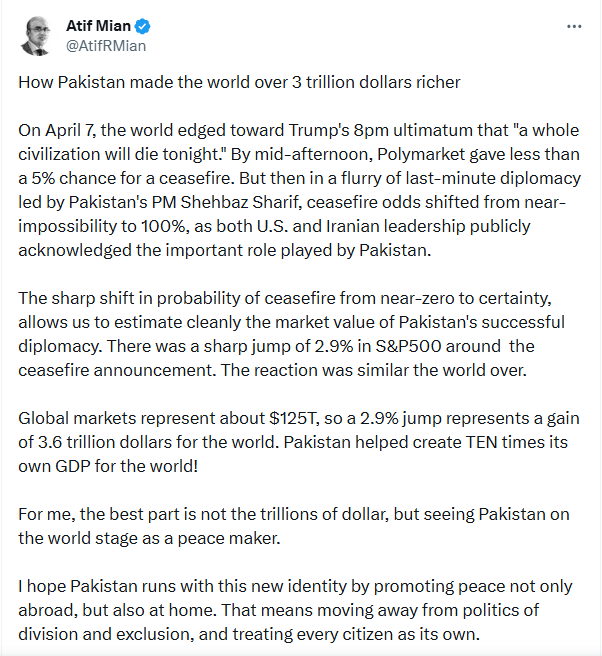
And let’s not miss the fact that Pakistan’s last-minute diplomatic efforts made the world $3.6 trillion richer.
With a confirmed ceasefire, the S&P 500 experienced a sharp jump of 2.9% – and since global markets represent around $125T, this jump translates to a gain of 3.6 trillion USD for the world! “Pakistan helped create TEN times its own GDP for the world!”, as quoted by Pakistani-American economist, Atif Mian.
But did this blissful night last?
Well, there are several aspects to consider.
Earlier this month, we awoke to the news of the US-Iran peace negotiations not going as positively anticipated. Both US Vice President JD Vance and Iranian Parliament Speaker Mohammad Bagher Ghalibaf returned home right away. Both greatly disappointed in their opponent’s rigidity.
The good news, however, is that just because VP Vance left Islamabad, it does not mean the peace talks are over. In fact, President Trump has been considering a second round of peace talks with Iran in Pakistan again!
Pakistan’s Foreign Minister Ishaq Dar remains hopeful that we will continue to facilitate dialogue between the US and Iran in the near future, hoping that both sides will cooperate in continued efforts to achieve peace.
Why exactly should this matter to Pakistan’s Tourism Industry?
Had the peace talks gone well, Pakistan’s global image would have flourished exponentially, allowing for greater growth in tourism. Clearly, accommodating the reconciliation of two incredibly formidable warring countries would not have been an easy task, and achieving it would have gathered all sorts of attention.
A lot of people have gotten to know about Pakistan and what it can offer to the world – especially in terms of its abundant potential in the tourism industry. From unfriendly perceptions about the country due to terrorism and other factors like political instability and unrest, the nation’s image would often take hits. However, after the unexpected acts of trust established by both the US and Iran to resolve their conflicts on Pakistani soil, our global standing has started turning around very rapidly.
The best-case study to support these expectations is that of Morocco. Ever since it became the first African-Arab nation to reach a semi-final in a World Cup, the nation’s tourism and hospitality industries have seen mind-blowing successes.
Compared to 2019, Morocco’s tourism revenues generated over 8 billion USD in 2022, exhibiting a post-COVID recovery rate of 112%. In the first quarter of 2023, the Marrakesh Menara Airport received over 1.7 million travelers, which marked a recovery rate of 113% compared to 2019. Since 2023, over 43,000 new hotel beds have been added in Morocco, with a heavy focus on infrastructure improvements and investments for the tourism industry. And towards the end of 2024, Morocco became Africa’s most-visited destination, overtaking Egypt. A position which was maintained in 2025 as well.
These are just some of the many brilliant statistics seen in Morocco after the sudden surge in its popularity.
Coming back to Pakistan, we had dreamt up similar, if not grander, ideas of success, particularly in the tourism industry. God knows we have the potential to rise to the top.
But then again, the question arises:
Would we have been able to handle such an increase in tourist activity?
Are our accommodations enough to cater to our guests? Do we have the right transportation networks for them? What about the management and allocation of basic resources required for a tourist to spend a decent time in the country?
The most burning question of all being, how would these successes have prevailed with the current global conditions?
If we simply put forth Morocco’s increase in airport arrivals and the insane improvements in hotels since 2022, one of our main concerns should be construction. The construction sector and the real estate market have taken a big hit due to the US-Iran war. The ongoing tensions and disheartening surges in fuel prices not only affect our personal travel expenses but also increase the cost of every other resource related to construction. Materials like steel and cement become more expensive. Machinery operations and overall transportation costs increase. Developers and investors struggle to meet ends due to budgetary constraints.
Despite friendly relations with Iran, Pakistan is, of course, bound to bear the effects of the US-Iran war just like any other country today. Apart from fuel costs, our property sector heavily relies on international investments from overseas Pakistanis, whose remittances have drastically decreased in recent weeks due to rising tensions in the Middle East.
Just in Dubai, mass layoffs have taken place, leaving thousands of people jobless overnight across several industries. Tourism and hospitality are among them. Visitor numbers in Dubai have been dealt harsh blows. Employers have seen their revenue fall by 50% or more. Salaries have been reduced by at least 30%. Any business that relied on tourist activity has fallen by 70-80%. Numbers that never could have been imagined. Conditions that never could have been expected in the ever-loved “City of Gold”.
Regardless, hikes in fuel prices remain the biggest of our concerns. Were tourist activity to increase in Pakistan right away, both domestic and international travelers would face a deeply discouraging reality in front of them. Pakistani tourism has been taking continuous hits due to the US-Iran war. Industry experts have highlighted the reducing travel demand as people try to minimise extra expenses and reduce recreational mobility.
We should remain hopeful in light of recent events. Pakistan managed to bring Iran and America together once. It can surely do it again. Especially considering that it is widely said that just because Vance has left the capital, the negotiations or peace talks have ceased. As long as both parties remain open to discussion, there is surely peace that can be made. And as for Pakistan’s standing, the nation retains a respectable image in the eyes of both parties. We must only hope for the best, especially regarding the tourism sector.